Climate Control vs. Non-Climate Storage: What Owners Need to Know
Climate Control & HVAC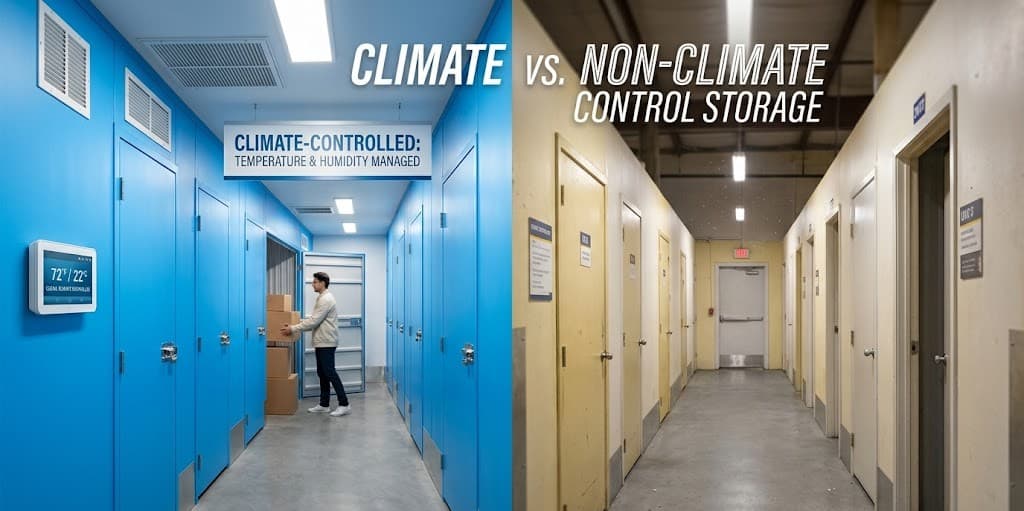
Climate-controlled storage went from a niche product to one of the most in demand unit types in the business. Tenants will pay extra to protect belongings from extreme heat, cold, and humidity. For facility owners, that premium means higher revenue per square foot. It also means higher operating costs and more maintenance.
This guide walks through the trade-offs so you can decide whether to add climate-controlled units to your facility, or do a better job marketing and maintaining the ones you already have.
1. Understanding the Climate Control Opportunity
The market data is pretty blunt. Non-climate rents dropped 50 basis points year over year. Climate-controlled rents actually rose 20 basis points (RentCafe). Even in a softer overall market, tenants are putting more value on environmental protection.
That spread matters. Operators with climate-controlled inventory are pulling more per square foot, and they're competing on something a standard drive-up facility just can't offer.
2. What "Climate Controlled" Actually Means
The term gets thrown around loosely in the industry, so let's be clear about what it actually means. True climate-controlled storage holds a consistent temperature range, usually between 55 and 85 degrees Fahrenheit, and in many cases regulated humidity (ideally 30 to 50% relative humidity) all year.
Being indoors isn't the same thing. A unit inside a metal building with no HVAC is not climate controlled, even if you're advertising it as "interior storage." Watch your marketing language. Calling units climate controlled when they aren't is the kind of mistake that turns into tenant complaints and lawsuits.
Temperature Control vs. Climate Control
- Temperature controlled: Heating and cooling keep the space inside a set temperature range, but nobody is managing humidity.
- Climate controlled: Both temperature and humidity are regulated. This is the full protection package.
If you're in a humid region (the Southeast, Gulf Coast, or Pacific Northwest), humidity control is just as important as temperature.
3. Which Items Need Climate Control?
Knowing what tenants put in climate-controlled units helps you market them better. One in three Americans (33%) currently rents self-storage (StorageCafe), and a lot of what they're storing genuinely needs environmental protection:
- Wood furniture: Temperature and humidity swings warp, crack, and grow mold on wood.
- Electronics: Computers, TVs, and audio gear don't do well with moisture or extreme heat.
- Documents and photos: Paper, photos, and artwork yellow, stick together, or grow mold in humid conditions.
- Musical instruments: Pianos, guitars, and brass are very sensitive to humidity and temperature shifts.
- Wine collections: Wine needs stable temperature and humidity to age properly.
- Clothing and textiles: Leather, fur, and delicate fabrics develop mildew, odors, and discoloration.
- Business inventory and records: Companies storing paper records, pharmaceutical samples, or any sensitive inventory usually need climate-controlled space.
Use this list on your website and in your marketing materials. It helps prospective tenants see why they should pick a climate-controlled unit, and why the price premium is worth paying.
4. Cost Differences: Building and Operating
Climate-controlled units cost more to build and more to run. Here's what to expect before you commit capital.
Construction Costs
- Building type: Climate-controlled units need fully enclosed, insulated buildings, typically multi-story concrete or steel structures with interior corridors. The per square foot cost is significantly higher than a single story drive-up.
- HVAC systems: Commercial HVAC equipment, ductwork, and controls add real upfront cost. Build in redundancy so one failure doesn't take the whole building offline.
- Insulation and vapor barriers: Done right, they're what makes the system work. Cut corners here and you've undermined the whole investment.
Operating Costs
- Energy: HVAC is the biggest ongoing expense. Depending on your climate and local energy rates, plan on $1.50 to $3.00 per square foot per year for heating and cooling.
- Maintenance: HVAC needs regular maintenance, filter changes, and eventual replacement. Budget for quarterly professional inspections at a minimum.
- Dehumidification: In humid climates, you may need dedicated dehumidification on top of standard HVAC. That's more capital up front and higher operating costs.
5. The ROI Case for Climate Control
Higher costs and all, climate-controlled units often deliver a better return on investment than standard units. Here's why the numbers usually work.
- Premium pricing: Climate-controlled units typically rent for 25 to 50% more than comparable non-climate units. In some markets, the premium is even higher.
- Higher occupancy: Demand for climate-controlled storage is growing faster than demand for standard storage, especially in urban and suburban markets.
- Longer tenancy: Tenants storing valuable or sensitive items tend to stay longer. Fewer vacancy days, less marketing spend per tenant.
- Competitive differentiation: In a market full of standard drive-up facilities, climate-controlled space sets you apart from operators who haven't made the move.
Run the numbers for your market specifically. Compare the extra construction and operating costs against the rental premium you can realistically charge. Payback for climate-controlled conversions or additions usually lands in the 5 to 8 year range, with strong cash flow after that.
6. HVAC Maintenance Best Practices
Your HVAC system is the backbone of your climate-controlled offering. Skip maintenance and you get higher energy bills, uncomfortable units, and expensive emergency repairs. Here's how to protect the investment.
Routine Maintenance Schedule
- Monthly: Check and replace air filters. Dirty filters tank efficiency and put strain on the system.
- Quarterly: Have a pro come out for an inspection. They should check refrigerant levels, electrical connections, thermostat calibration, and the ductwork.
- Annually: Get a full system tune up before the peak cooling season. That means cleaning coils, checking drain lines, and testing the safety controls.
- As needed: Watch your energy bills for unexpected spikes. A bill that's suddenly higher usually means a system working too hard because something is wrong.
Smart Monitoring
Install temperature and humidity sensors throughout your climate-controlled buildings. Newer systems can send an alert to your phone the moment conditions drift outside your target range. You catch problems before they affect a tenant's belongings. Some management software platforms can pull these monitoring systems in for centralized oversight.
System Redundancy
If a single HVAC unit serves an entire building and it fails in July, you have a real problem on your hands. Where possible, design with redundancy. Multiple units that can carry the load if one goes down. This matters most in extreme climates.
7. Should You Add Climate-Controlled Units?
The answer depends on your market, your existing layout, and your budget. Here are the factors to evaluate before you commit.
- Market demand: Look at your local competition. If nearby facilities with climate-controlled units are running high occupancy and charging premium rates, there's probably unmet demand you can capture.
- Climate: Facilities in regions with extreme heat, cold, or humidity have the strongest case for climate control. In mild climates, the case is weaker.
- Existing infrastructure: Converting an existing building is cheaper if the structure can support HVAC without major modifications.
- Financing: A lot of lenders and SBA loan programs look favorably on climate-controlled storage projects because of the higher revenue potential.
The Bottom Line
Climate-controlled storage isn't right for every facility or every market. The data makes a strong case, though, for operators who are in the right location and have the capital to invest. The rental premium is real. Tenant retention is better. Demand keeps growing as tenants get more educated about what temperature and humidity actually do to their belongings.
The operators who do this well treat climate control as one connected system. Right building design, properly sized HVAC with redundancy, a disciplined maintenance schedule, and marketing that explains the value clearly to tenants.
Whether you're planning a new build, a conversion, or just trying to dial in the climate-controlled units you already have, the right HVAC vendor makes a real difference. Browse climate control and HVAC providers in the StorageOwnerAdvisor vendor directory to find companies who actually know the requirements of self-storage facilities.
Sources: StorTrack Self-Storage Industry Statistics (2025), RentCafe Self-Storage Monthly Report, StorageCafe Self-Storage Demand and Trends (2025), Yardi Matrix Self-Storage Market Outlook.
Looking for Climate Control & HVAC vendors?
Browse our directory of trusted climate control & hvac providers for storage facilities.
View Climate Control & HVAC Vendors