Storage Facility Security Checklist for 2026
Security Is Your Biggest Selling Point
When someone is shopping for a storage unit, security is one of the first things they ask about. A 2025 StorageCafe survey of 2,824 renters found that 17% rank security (cameras, gated access, on-site staff) as a top factor in choosing a facility (StorageCafe). The payoff for getting it right is real. A well-secured facility charges higher rates, pays lower insurance premiums, and earns the kind of referrals that fill units.
Security isn't a one and done. The numbers from the past year aren't pretty. A 2024 analysis of U.S. police data shows thefts at storage facilities are up 19% year over year (ArcadianAI), and 57% of facilities report multiple break-ins (Janus International). At the facilities that get hit, the average break-in happens every two to three months (Janus International).
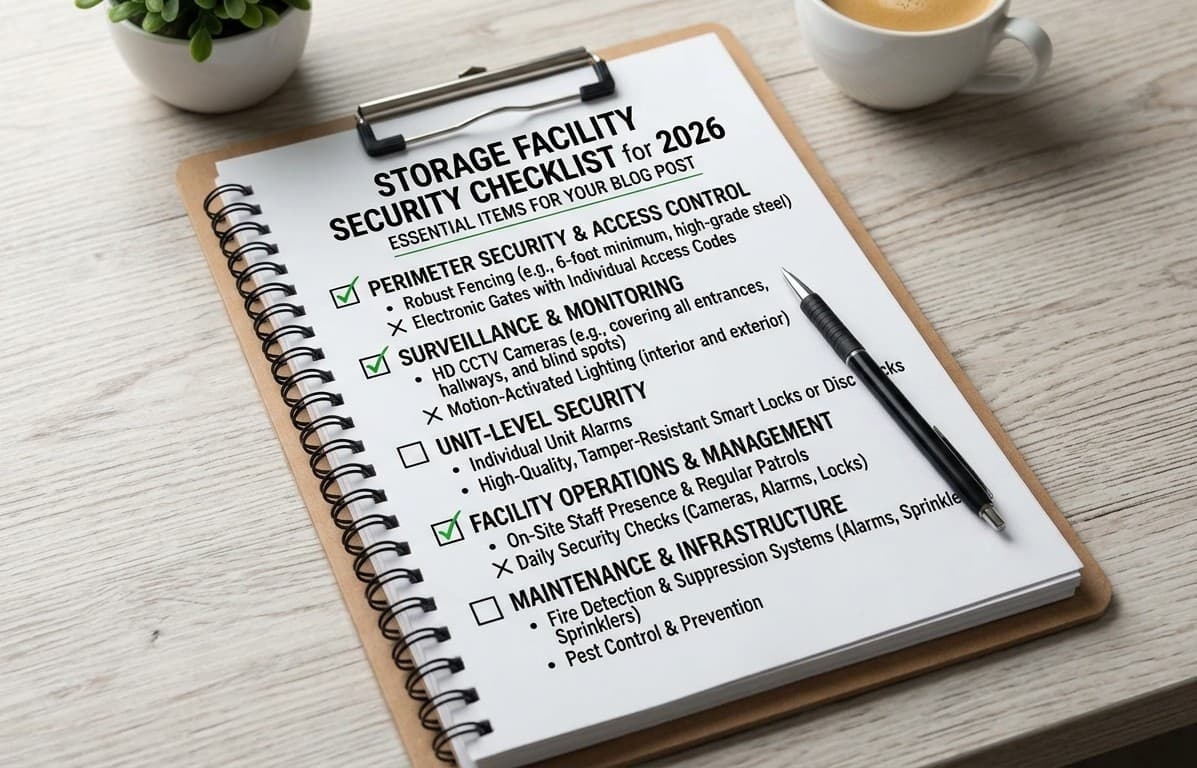
Use this checklist to walk your property and find the gaps before someone else does.
Surveillance Camera Systems
- Coverage: Cameras need to cover every entry and exit, all the hallways, elevator areas, and the perimeter fence. Walk the property looking for blind spots, especially around corners and behind buildings.
- Resolution: Run at least 4K cameras. Lower resolution footage is usually useless when you actually need to identify a face or a license plate.
- Night vision: Test your cameras after dark. If the footage is grainy or washed out, you have a problem. Infrared or starlight cameras are the standard now.
- Cloud storage: Keep at least 30 days of footage in the cloud. An on-site DVR is just one more thing a thief can walk off with.
- Remote access: You should be able to pull up live and recorded footage from your phone any time of day.
- Signage: Post clear signs that the property is under 24/7 video surveillance. The signs alone scare off plenty of casual criminals.
Access Control Systems
- Keypads and gates: Every tenant gets their own access code. Codes should drop the second a tenant moves out or goes delinquent.
- Unit door alarms: Door alarms on individual units tell you the moment a door opens. They also keep tenants from claiming they were never in the unit when something goes missing.
- Bluetooth or app-based entry: Newer systems let tenants get in with their phone instead of a keypad code. Codes get shared all the time. A phone is much harder to pass around.
- Access logs: Log every entry, who and when. When something goes wrong, that log is the first thing the police are going to ask for.
- Access hours: Decide if 24 hour access is worth the risk. Restricting hours cuts down on break-ins, but it also turns off tenants who want to grab something at midnight.
Lighting
- Perimeter lighting: The whole perimeter should be lit after dark, with no shadowed corners for anyone to hide in.
- Motion-activated lights: Add motion-triggered fixtures in the parts of the property that don't get much foot traffic. They're a deterrent and they save power.
- LED upgrades: If you're still running anything that isn't LED, switch. Brighter, longer life, and a fraction of the operating cost.
- Monthly walk through: Add a lighting check to your monthly maintenance routine. A burned out bulb is a security gap that opens the same night it happens.
Alarm and Monitoring Systems
- Intrusion detection: Put alarms on the office, supply rooms, and any space with sensitive equipment or records.
- Professional monitoring: Use a monitoring service that can call the police when an alarm trips. Especially important for nights and weekends when nobody is on site.
- Fire and environmental alarms: Smoke, heat, and flood detectors protect both your buildings and your tenants' stuff.
- Test monthly: Test every alarm system on a monthly schedule. An alarm you haven't tested isn't an alarm you can trust.
Cybersecurity for Smart Systems
As facilities pile on smart locks, IoT sensors, cloud-based management software, and app-based access control, cybersecurity moves from "nice to know" to "core part of the job." Most owners haven't caught up.
- Network separation: Run your security and management systems on their own encrypted network. Keep it separate from the Wi-Fi you give tenants or staff.
- Strong passwords: Wipe the default passwords on every camera, device, and login. Use a password manager so each one is unique and complex.
- Patch everything: Keep firmware and software current. Most patches fix known vulnerabilities, which means skipping updates is the same as leaving the door open.
- Two-factor authentication: Turn it on for your management software, cloud storage, and anything that holds tenant data.
- Backups: Back up tenant data and business records on a schedule. Ransomware attacks on small businesses keep climbing year after year, and a clean backup is sometimes the only thing standing between you and paying.
- Vendor vetting: Before you sign with a tech provider, ask about their security certifications and how they handle your data. If they can't answer cleanly, keep looking.
Insurance Requirements
- Annual review: Sit down with your agent every year and walk through your policy. If you've made improvements to the property, your coverage should reflect them.
- Security discounts: Ask your insurer what discounts they offer for cameras, access control, and professional monitoring. Most won't volunteer the savings.
- Tenant insurance: Require or strongly push tenants to carry their own storage insurance. It protects them and it protects you.
- Documentation: Keep records of every piece of security equipment, your maintenance schedule, and any incident reports. The paperwork is what makes insurance claims go smoothly.
Physical Security Basics
- Fencing: Walk the perimeter and look for damage, gaps, or low spots that are easy to climb. Where local code allows, add anti-climb features like barbed wire or fence toppers.
- Landscaping: Keep bushes and trees trimmed back from buildings and fences. Overgrown plants give people somewhere to hide and they block your camera views.
- Lock quality: If you sell or supply locks, stock high-quality disc or cylinder locks. The cheap ones get cut in seconds.
- Signage: Post clear signs covering your security measures, trespassing policy, and an emergency contact number.
Put Your Checklist Into Action
Print this checklist, walk the property, and be honest with yourself on each item. Tackle the highest risk gaps first. That usually means access control weaknesses and camera blind spots, then cybersecurity.
Upgrading security doesn't have to happen in one weekend. A lot of vendors offer financing or subscription pricing that spreads the cost out. To compare security and access control vendors side by side, visit the StorageOwnerAdvisor directory where you can browse providers rated by other facility owners.